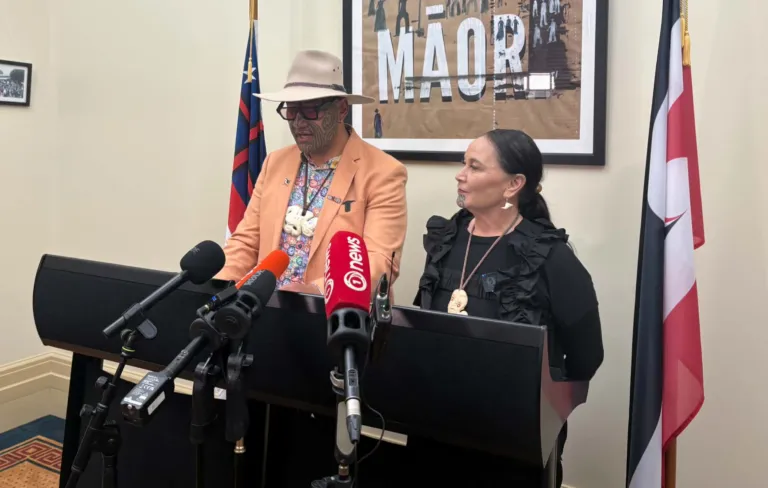
Te Pāti Māori has proposed a $1 billion Energy Sovereignty Fund aimed at lowering household power costs and increasing Māori and community ownership of renewable energy assets.
Its Energy Sovereignty Policy sets out a “cut, build and own the power” framework, with a goal of shifting whānau, hapū, iwi and communities from energy consumers to producers and owners by 2035.
The fund would invest in household energy upgrades, marae and papakāinga resilience, Māori-owned renewable generation, community batteries, microgrids, workforce development and infrastructure on Māori land.
Te Pāti Māori also proposes a government-backed financing scheme offering long-term, low-cost or zero-interest support for solar panels, batteries, insulation, efficient heating, hot-water systems and electric-vehicle charging. The scheme would be delivered through an expanded Ratepayer Assistance Scheme.
Renters and social-housing tenants would be included through community batteries, renter-friendly technology and stronger electrification standards. New Crown-funded housing would increasingly be expected to incorporate renewable energy systems.
A proposed National Energy Independence Taskforce, comprising iwi, energy-sector representatives and workforce operators, would develop a national plan covering generation, storage, electricity networks, transport, industry and workforce needs.
The party says regulators, including the Commerce Commission and Electricity Authority, should receive stronger powers to investigate excessive prices and profits and intervene where competition or consumer protections are inadequate.
A fair-value framework would also determine payments to households and communities supplying electricity or battery services to the grid.
Co-leader Rawiri Waititi said the initiative would be funded from its proposed wealth tax.
The policy says renewable development must uphold Te Tiriti o Waitangi, mana whenua authority and environmental protections, while reducing Aotearoa’s reliance on imported fossil fuels