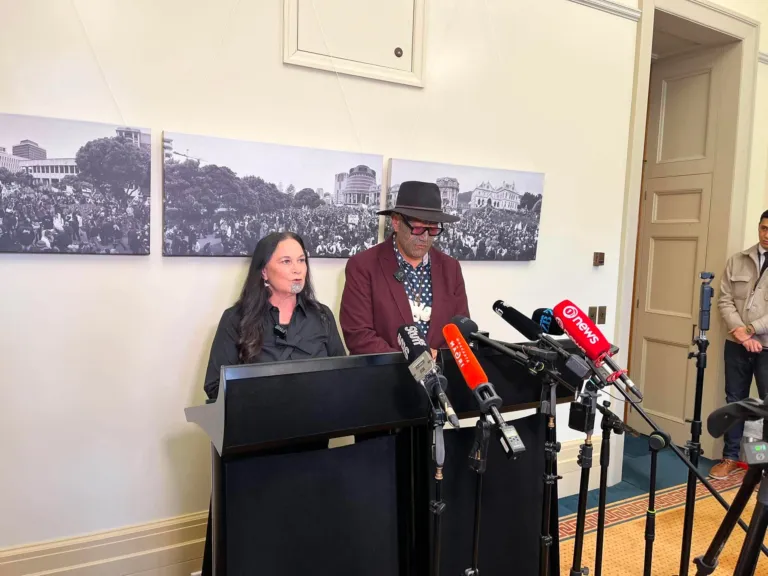
Te Pāti Māori has unveiled an election tax policy that would make the first $30,000 of income tax-free while requiring high-income earners, wealthy individuals and businesses to contribute more.
The party says its “Kiwi Tax Plan” would reduce income tax for 4.5 million people, or 97 percent of taxpayers. It estimates 4.2 million people would receive an average additional benefit of $4,000 a year.
Under the proposed income tax brackets, earnings between $30,001 and $60,000 would be taxed at 15 percent. Income between $60,001 and $90,000 would be taxed at 33 percent, rising to 39 percent for earnings up to $180,000, 42 percent up to $300,000 and 48 percent above that level.
People earning $60,000 or less would also qualify for a targeted “kai credit”, which the party says would be worth up to eight weeks of grocery costs each year and benefit about three million people.
The package would be partly funded through a net wealth tax applying to individual assets above $2 million. Rates would begin at 1.5 percent and rise to 2.5 percent on net wealth exceeding $10 million. Te Pāti Māori says only the wealthiest 3 percent of people would be affected.
Other measures include raising the company tax rate from 28 to 33 percent, imposing a 5 percent tax on profits transferred offshore, and introducing taxes targeting vacant homes and land banking.
A 5 percent stamp duty would also apply to residential property sales, with first-home buyers purchasing homes below $1 million exempt.
The party proposes investing $1 billion in agencies responsible for tackling fraud, tax evasion and aggressive tax avoidance.