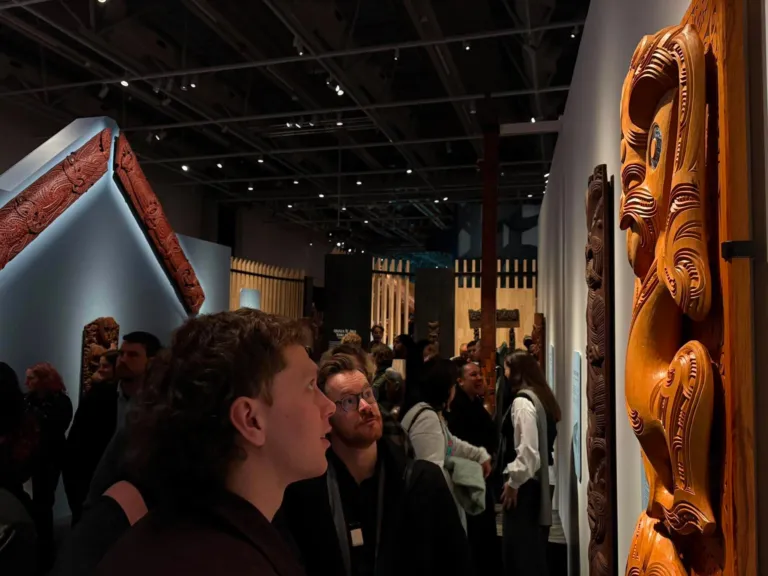
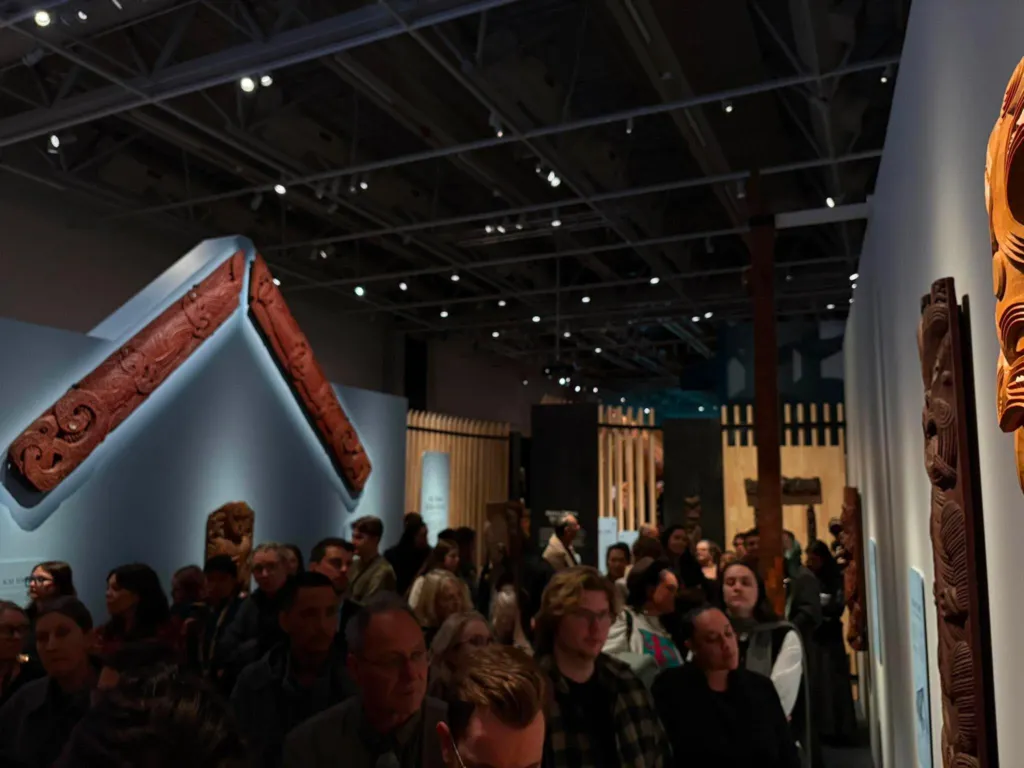
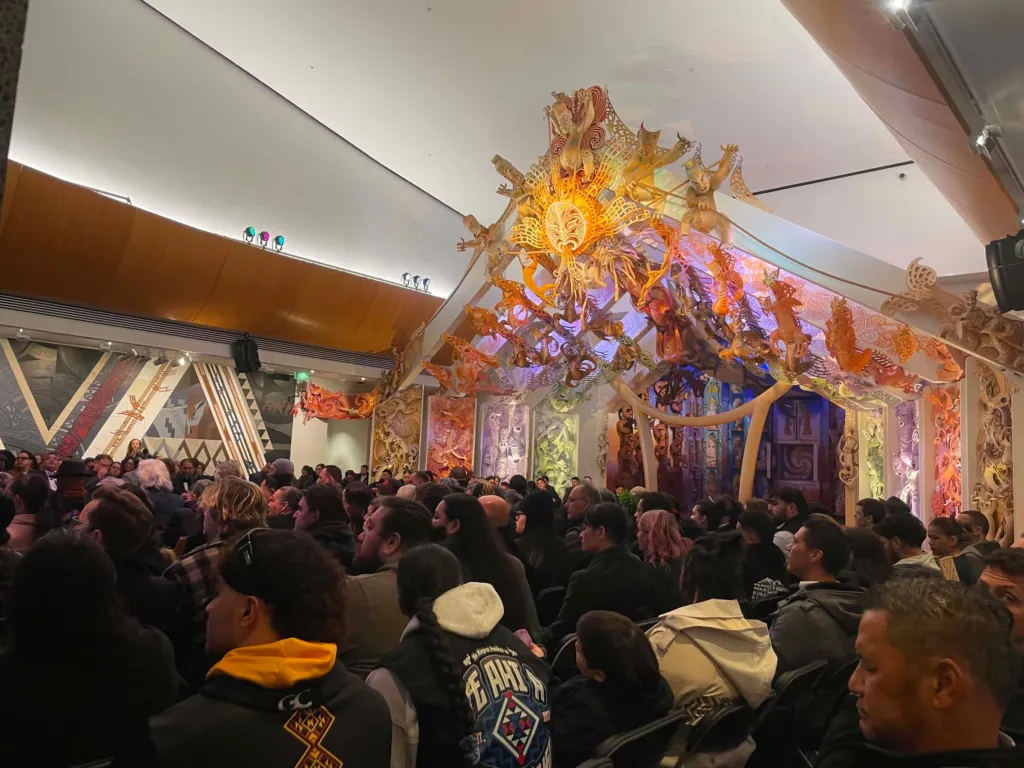
Te Ātiawa manawhenua gathered at the Museum of New Zealand Te Papa Tongarewa this morning for a sacred karakia and blessing, marking the final preparation before tomorrow’s official public opening of He Toi Whakairo: The Art of Māori Carving.
The landmark exhibition brings together 147 treasured taonga, many of which have remained unseen for more than four decades. More than 150 people were present this morning as part of celebrations.
“For many international visitors, Māori carving is encountered only briefly – perhaps through tourism adventures or architecture. This exhibition offers something far deeper: the chance to experience the scale, innovation, spirituality, and continuing evolution of whakairo across seven centuries,” Te Papa Kaihautū, Dr Arapata Hakiwai says.
“From its strong foundation of mātauranga Māori and te ao Māori, this exhibition engages with global conversations around Indigenous art, museum practice, and cultural continuity,” Dr Arapata says.
Spanning seven centuries, the collection features rare historical pieces dating back to the 1300s, including ancient carved treasure boxes and tattooing instruments, alongside bold contemporary works like Rangi Kipa’s 2.1-metre-tall hot pink poupou.
“He Toi Whakairo shows Māori carving as a dynamic artform that continues to evolve through new technologies, materials, identities and artistic voices, rather than as a tradition frozen in time,” co-curator, Dougal Austin.
Running for five years, the exhibition offers visitors a rare opportunity to experience the deep spirituality, scale, and continuous evolution of the Māori carving artform.
The exhibition also features works by wāhine tā whakairo, including Ngaroma Riley’s poi swinging puppet self-portrait Kapahaka Queen.
Highlighting the contributions of women artists, co-curator Jana Pātete says, this exhibition brings together wāhine Māori artists who are navigating male-dominated carving traditions and reshaping them through their own whakapapa, resistance, and innovation.