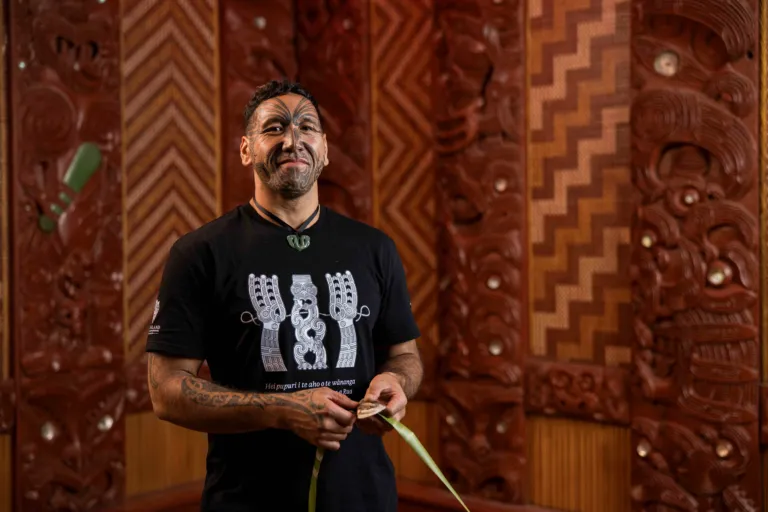
From Te Rito o Rotowhio to the runway, ancestral knowledge, weaving, and design are coming together as the New Zealand Māori Arts and Crafts Institute (NZMACI) collaborates with designer Shona Tāwhiao for her collection, The House of Harakeke, at New Zealand Fashion Week (NZFW).
One hundred years after the Māori Arts and Crafts Act 1926 established schools dedicated to the study and practice of Māori arts and crafts, NZMACI is continuing that legacy within a contemporary setting at NZFW.
A Legacy Represented on the Runway
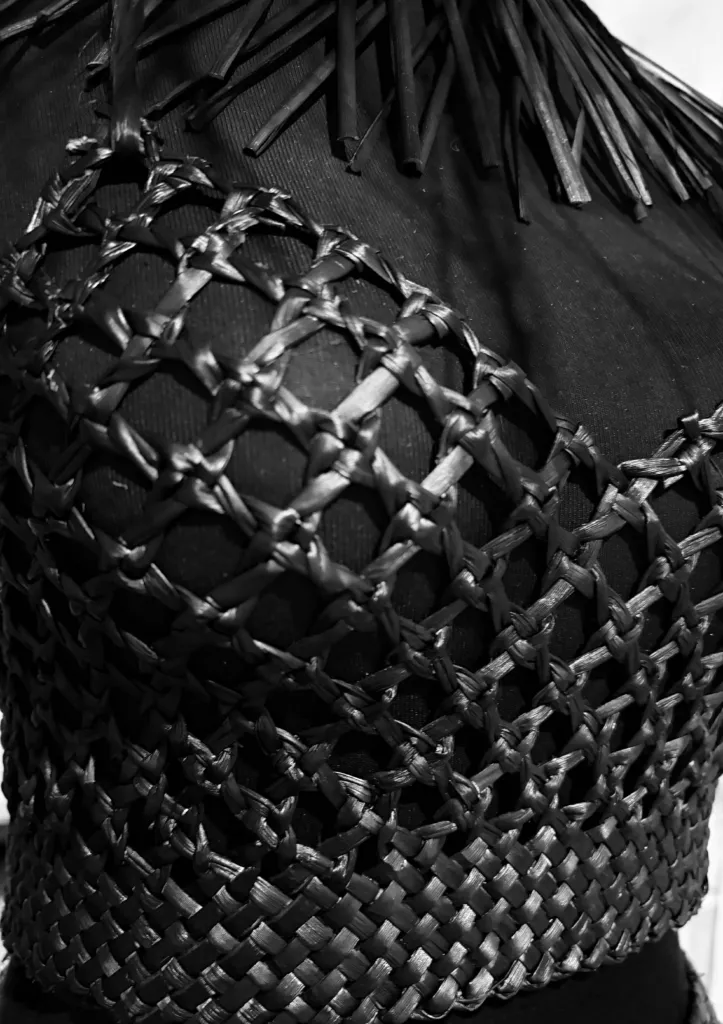
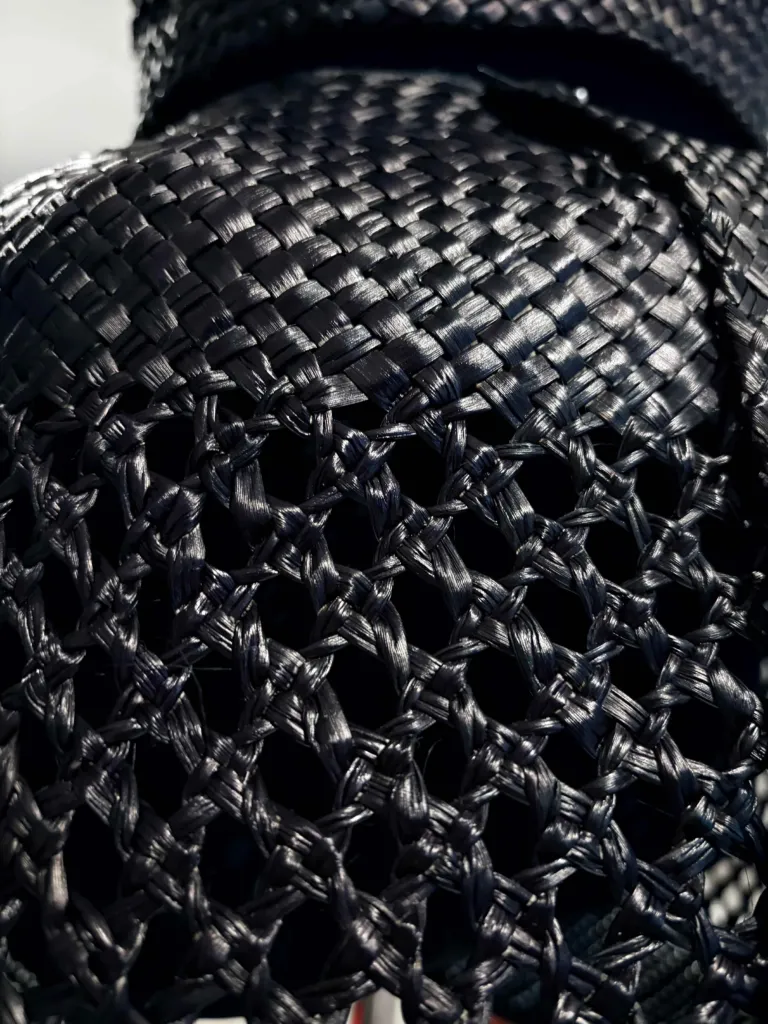
As part of the Kāhui Collective’s 2026 programme, six woven pieces created through a collaboration between weaver and designer Shona Tāwhiao (Ngai Te Rangi) and NZMACI’s Te Rito o Rotowhio (National Weaving School) will feature in The House of Harakeke on Thursday, 20 August. The collection is about the versatility of the fibre.
For Cori Marsters (Te Arawa, Te Whakatōhea), Tumu (Head) of Te Rito o Rotowhio, the collaboration demonstrates the integration of traditional Māori knowledge and contemporary fashion.
“Working with Shona on these pieces has been a really special opportunity for our tauira to see how the skills they are learning can move into different creative spaces, including high-end fashion,” he says.
Marsters joins NZFW following the Indigenous Weaving Conference in Darwin. In addition to modeling on the runway for Kāhui Collective designers, he is collaborating with designer Bobby Luke Campbell for Te Aho Tapu – The Sacred Thread at Auckland Museum, where piupiu he crafted will be featured.
Collaboration and Production: The House of Harakeke
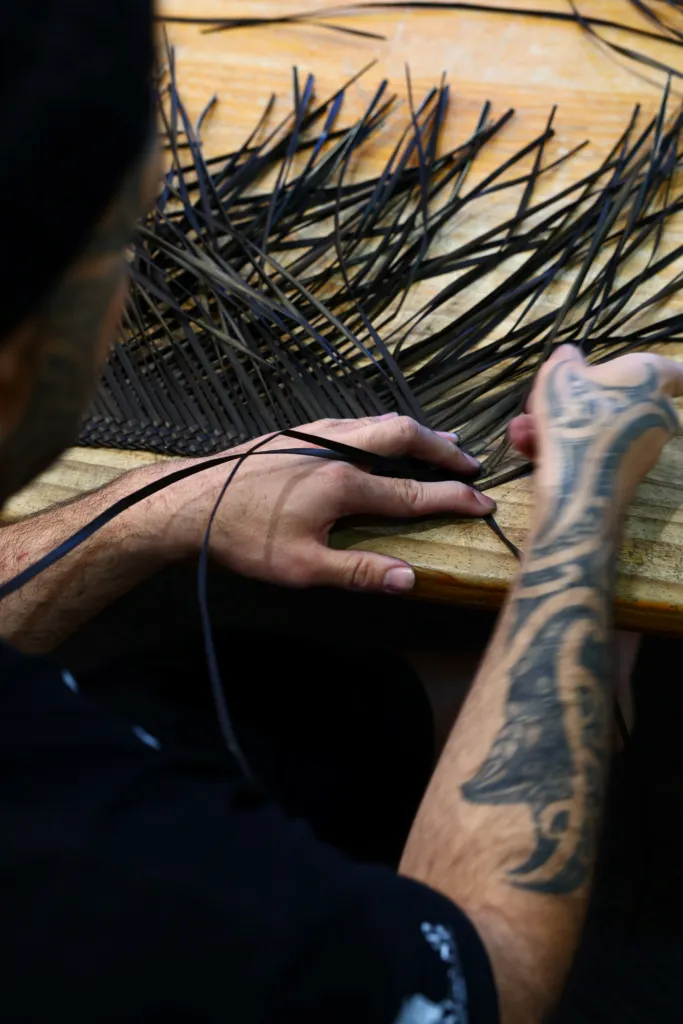
The collaborative process began with a week-long wānanga at the National Weaving School at the end of May, attended by Tāwhiao (Ngāi Te Rangi, Whakatōhea, Te Whānau-ā-Apanui) and Kāhui Collective founder Kiri Nathan (Ngāpuhi, Ngāti Hine, Ngāti Hauā, Ngāti Maru, Ngāti Paoa). Following the wānanga, Tāwhiao invited NZMACI tauira (students) and pouako (tutors) to assist in producing the collection.
“The students assisted with two of the six looks while Cori has been supporting the mahi 100%, and being able to use the resources at Te Rito o Rotowhio has been invaluable,” she explains.
The preparation involved harvesting and processing traditional materials:
- Harvesting: Gathering muka harakeke.
- Preparation: Four tauira and five raranga kaiako spent two days preparing hundreds of pokinikini (cylindrical flax).
- Construction: Assembling the woven garments for the collection.
“I’m hoping the collaboration will inspire the tauira to take their weaving skills further in their careers,” says Tāwhiao. “The collection is called The House of Harakeke, which has a connection to Te Rito o Rotowhio and the harakeke that it’s made from.”
Tāwhiao noted that the environment at Te Rito o Rotowhio reflects international high-fashion production structures, drawing parallels between European ateliers and the Whare Pora at NZMACI.
Marsters added: “When our harakeke garments meet other garments – it’s deliberate. Indigenous ancestral exclusiveness is remembered through time and hands.”
NZMACI Integration Across the Kāhui Collective Programme
The runway collaboration forms one part of NZMACI’s broader involvement in the Kāhui Collective 2026 programme, which incorporates runway, retail, and cultural activities.
| Activation | Details |
| Runway Collaboration | Six woven harakeke garments featured in Shona Tāwhiao’s The House of Harakeke. |
| Indigenous Fashion Symposium | Presentation on Hae Whakarewa, an award-winning typeface developed by Stacy Gordine and Guardians Agency representing NZMACI’s three wānanga. |
| Whiri Workshop | Hands-on braiding workshop led by Stacy Gordine covering 3-, 4-, 5-, 7-, 8-, and 12-strand techniques. |
| Āhua Gallery Activation | Retail showcase featuring contemporary taonga crafted by NZMACI tauira. |
The whiri (braiding) workshop, led by Tumu Te Takapū o Rotowhio Stacy Gordine (Ngāti Porou), teaches traditional techniques used as a foundational skill for tauira before they enter specialist carving practices.
Balancing Tradition and Modern Expression
Ariki Tibble, General Manager NZMACI Commercial and Foundation, stated that the Institute continuously balances the preservation of traditional practice with modern applications.
“NZMACI is constantly navigating the balance between sustaining, protecting and passing down mātauranga around traditional Māori arts and crafts, while ensuring those traditions continue to live and find expression in a contemporary world,” says Tibble.
“Fashion Week is a great example of that, taking knowledge grounded in generations of practice into a new creative space, while keeping its integrity at the centre.”